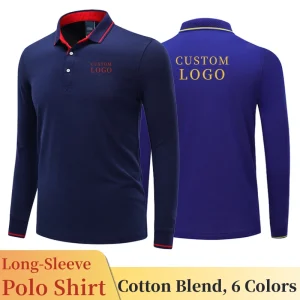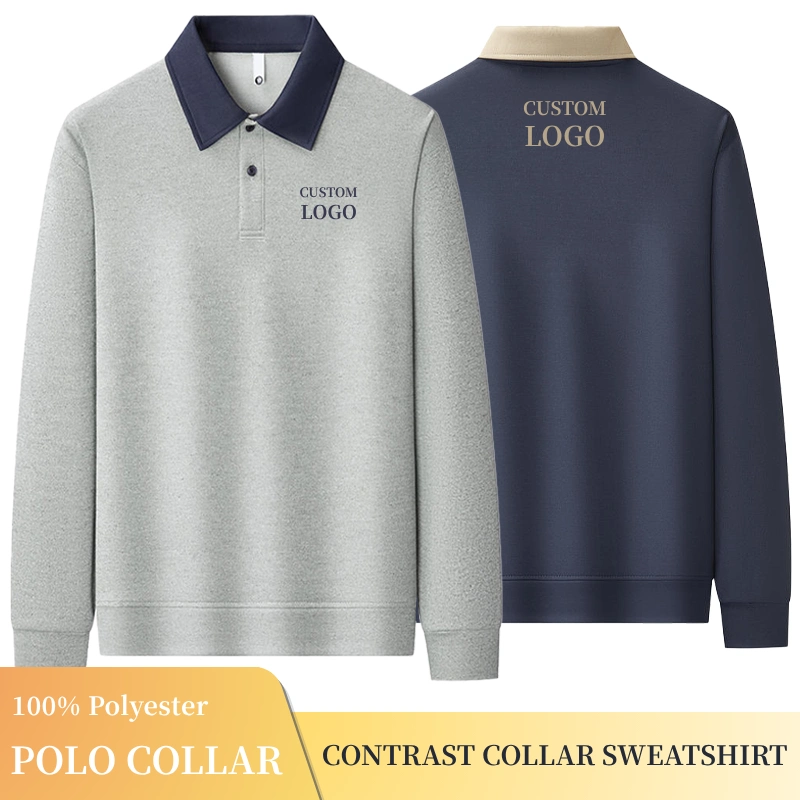
Polo Collar Sweatshirts with a Contrast Collar
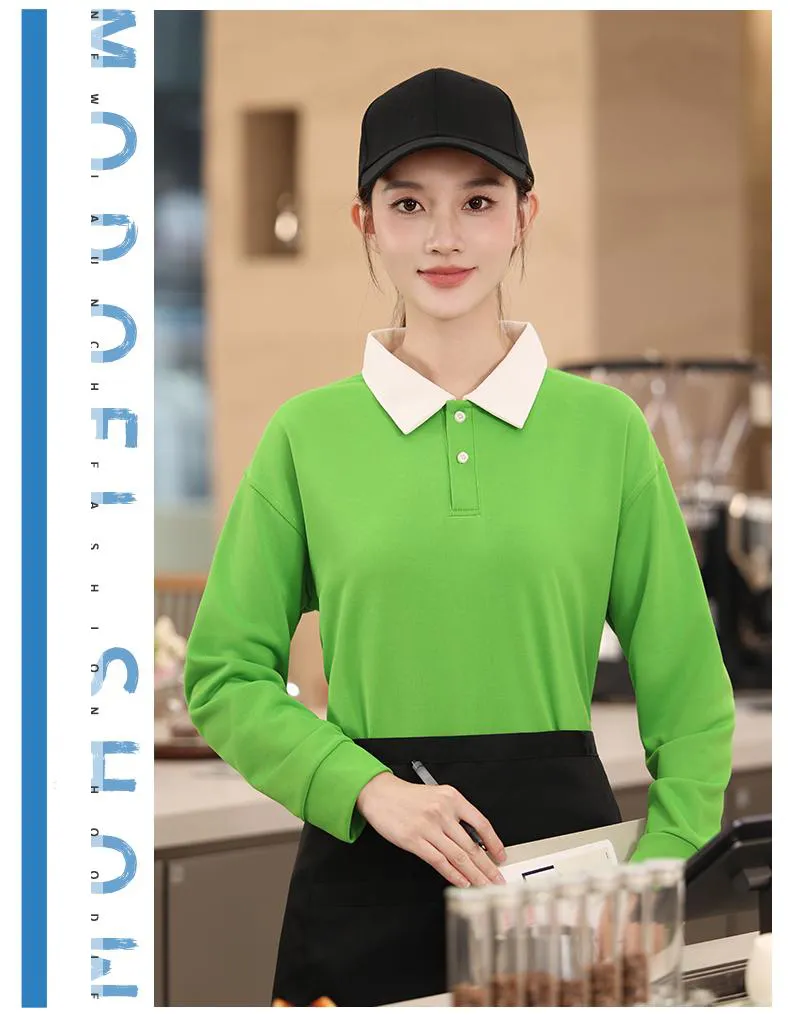
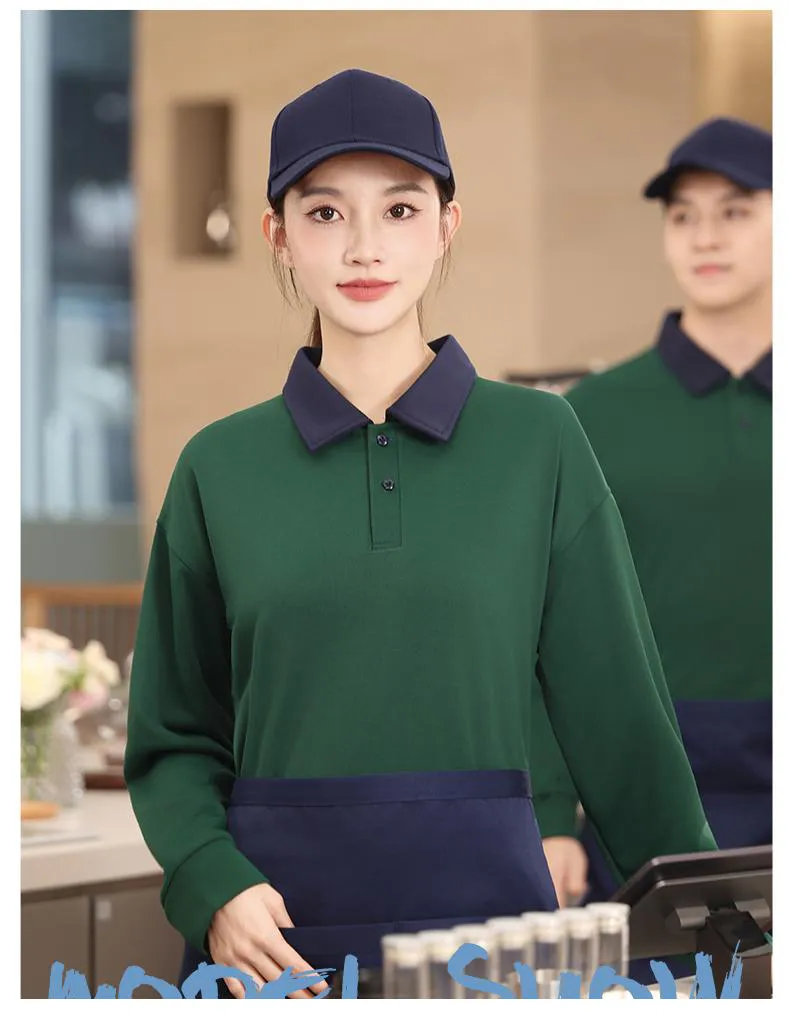
Polo collar sweatshirts in 270gsm polyester french terry. Contrast collar, two button placket, self fabric cuffs and hem, S to 4XL, 21 colours.
craftsmanship. Contact us for quotation!
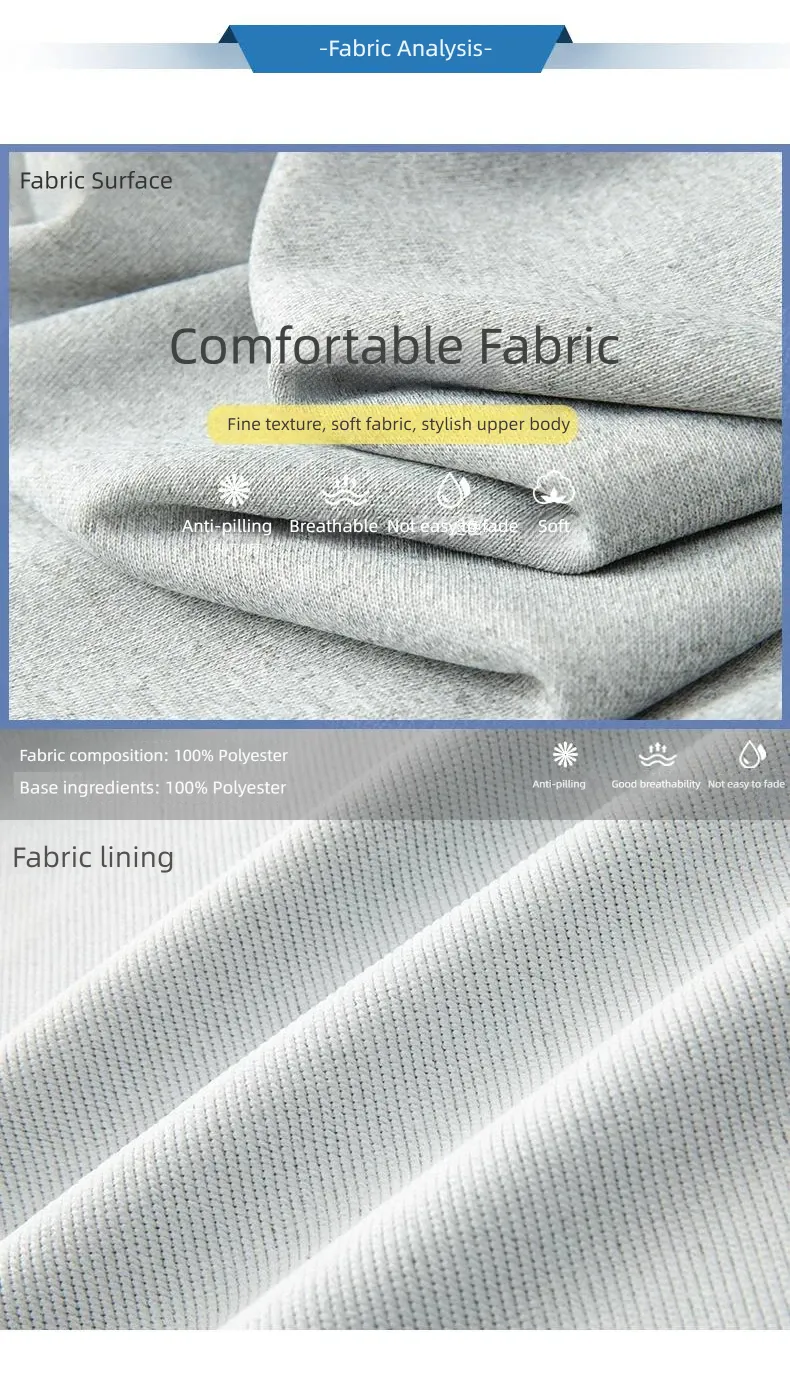
270 gsm polyester french terry, not a brushed fleece
Most sweatshirts sold as french terry are cotton, and there is nothing wrong with that. These polo collar sweatshirts run on a 270 gsm polyester french terry instead, which the trade also calls loopback. The face is plain and smooth, the inside carries a soft standing loop of yarn, and it is that loop rather than a brushed nap that traps a layer of warm air against the skin. Read the weight before anything else. 270 gsm is mid-weight, not heavy, so this is a piece for cool mornings rather than hard winter. The reason these polo collar sweatshirts use polyester is what happens after fifty washes. A cotton loopback can come in at the hem and lose its edge; polyester holds its size and its colour, because the dye goes into the fibre rather than sitting on the surface, and the fibre does not take up water the way cotton does, so it dries faster on a line or over the back of a chair. The hand stays soft enough to wear against the neck all day, which matters more on a collared piece than it sounds.

The collar carries a colour, and the placket stays short
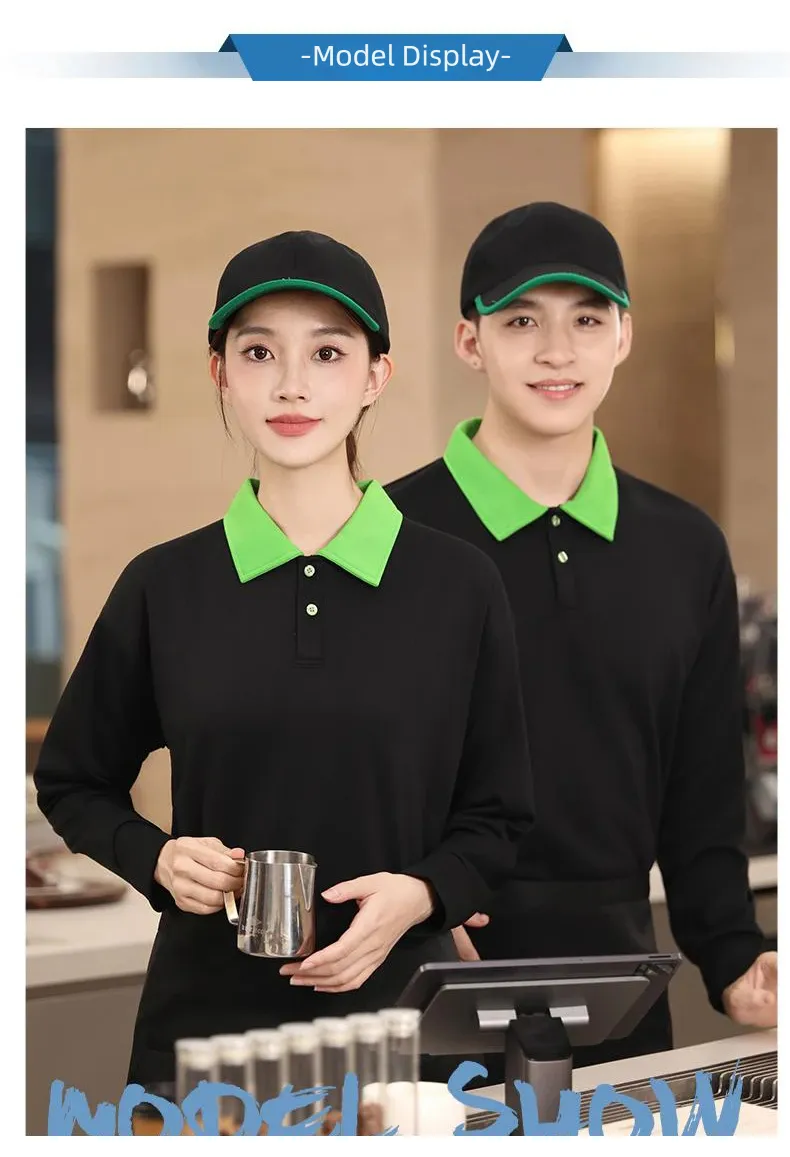
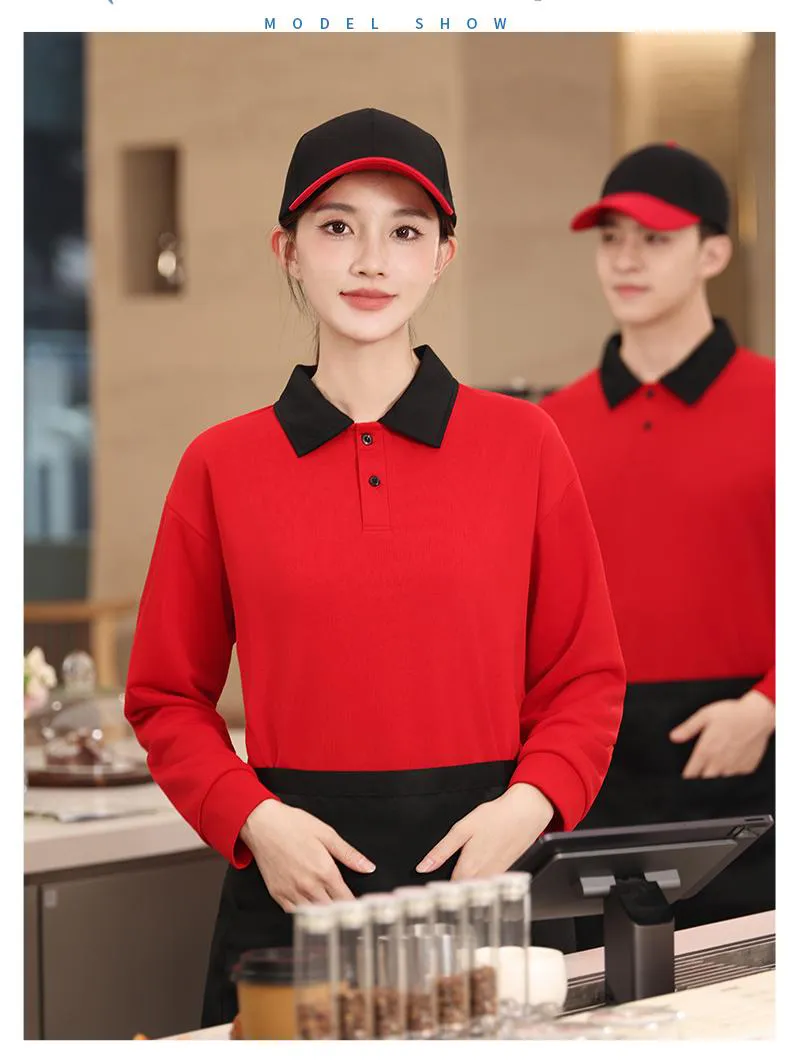
The collar is the part of a work sweatshirt that either lifts the whole piece or makes it look like a giveaway, and on polo collar sweatshirts it is where a buyer decides. This one is cut from the same french terry as the body, in a second colour, and it sits on a two button placket built the way a polo shirt is built. Two buttons, no zip, no hood. That small change does more than it looks: a collared sweatshirt reads as uniform in a way a crewneck never does, so a restaurant floor, a reception desk or a trade stand all look staffed rather than dressed. The collar keeps its line because it is the body cloth and not a soft rib that rolls over after a month, and the colour break gives the eye something to catch at the neck instead of one flat block from shoulder to waist.
Cuffs and hem in the same cloth, no rib
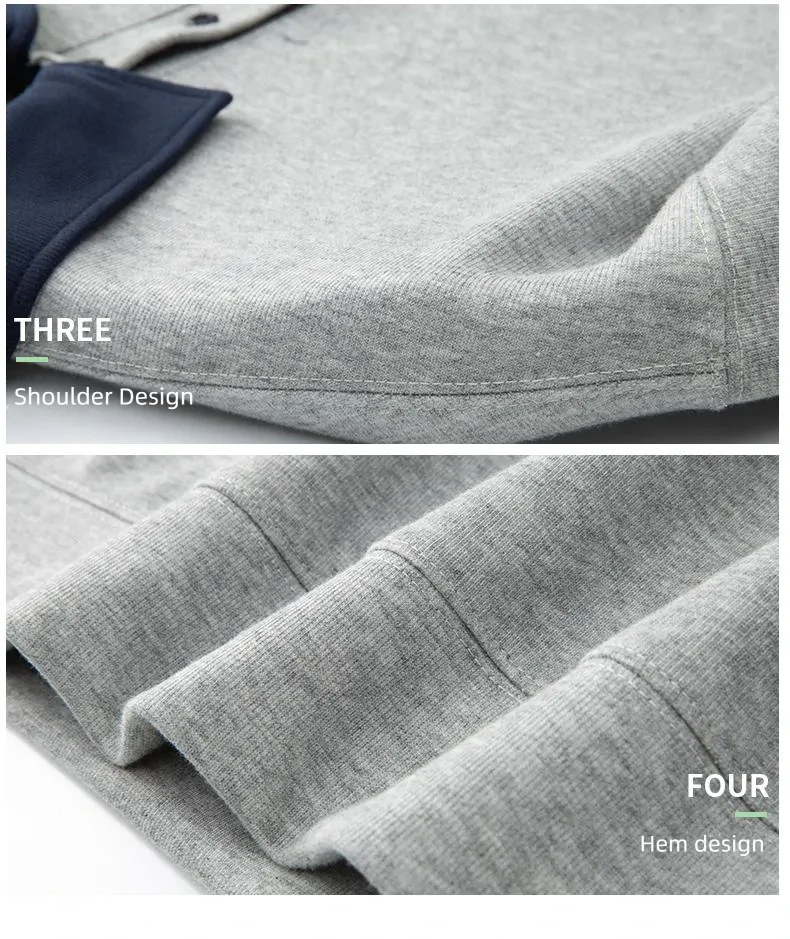
On polo collar sweatshirts the cuffs and the hem are the two places where a cheap piece gives itself away. Here both are finished with a band cut from the same cloth as the body, in the same colour, joined as a separate piece and stitched down, with no rib in either of them. Rib pulls in and springs back, which is right on a hoodie and wrong on a piece meant to look like a shirt. On these polo collar sweatshirts a self fabric band sits flat, runs level around the wrist and the waist, and does not go slack or bag out after a season of washing, so the shape stays square at the bottom. The front is left clean, with no pocket. That is a decision rather than a saving: a flat panel from the placket down takes a chest logo without a pocket flap competing for the same space, and anyone who needs to carry something already has pockets in their trousers. The cut is one unisex block, straight through the body.
21 colour combinations, and where it gets worn
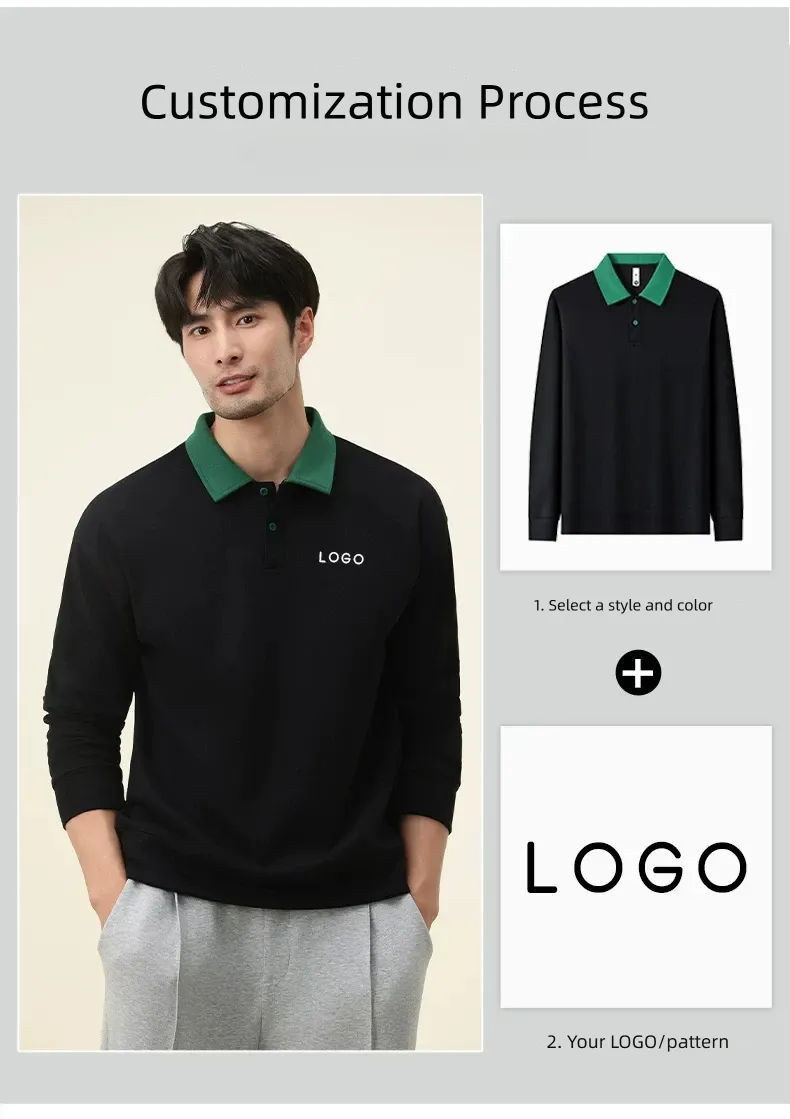
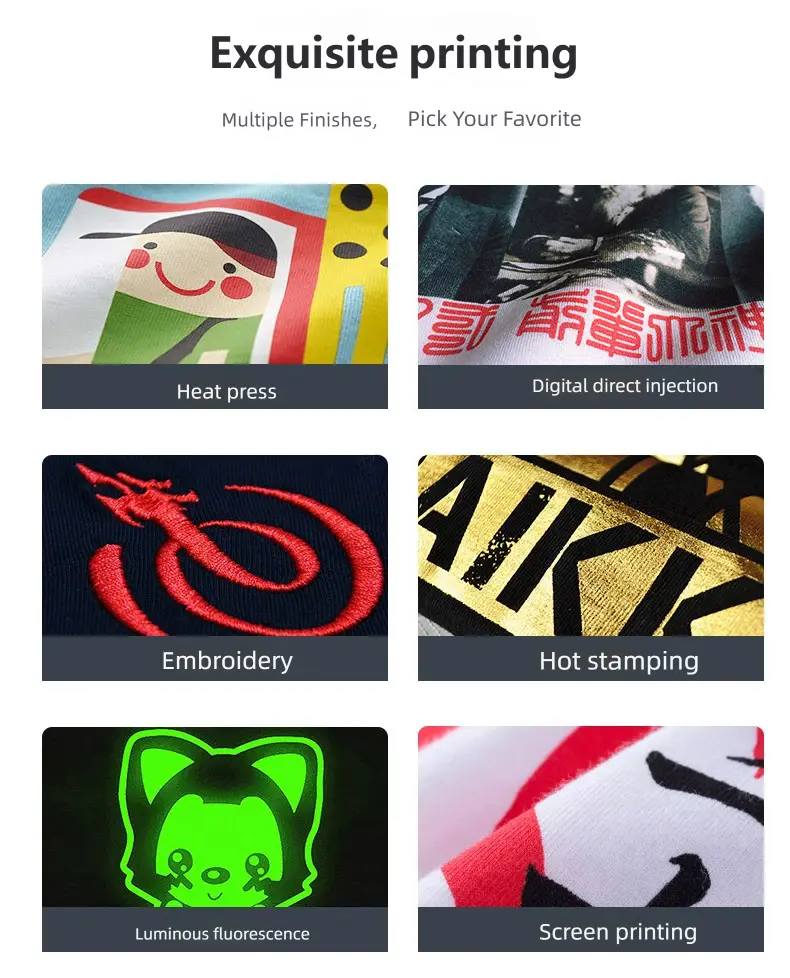
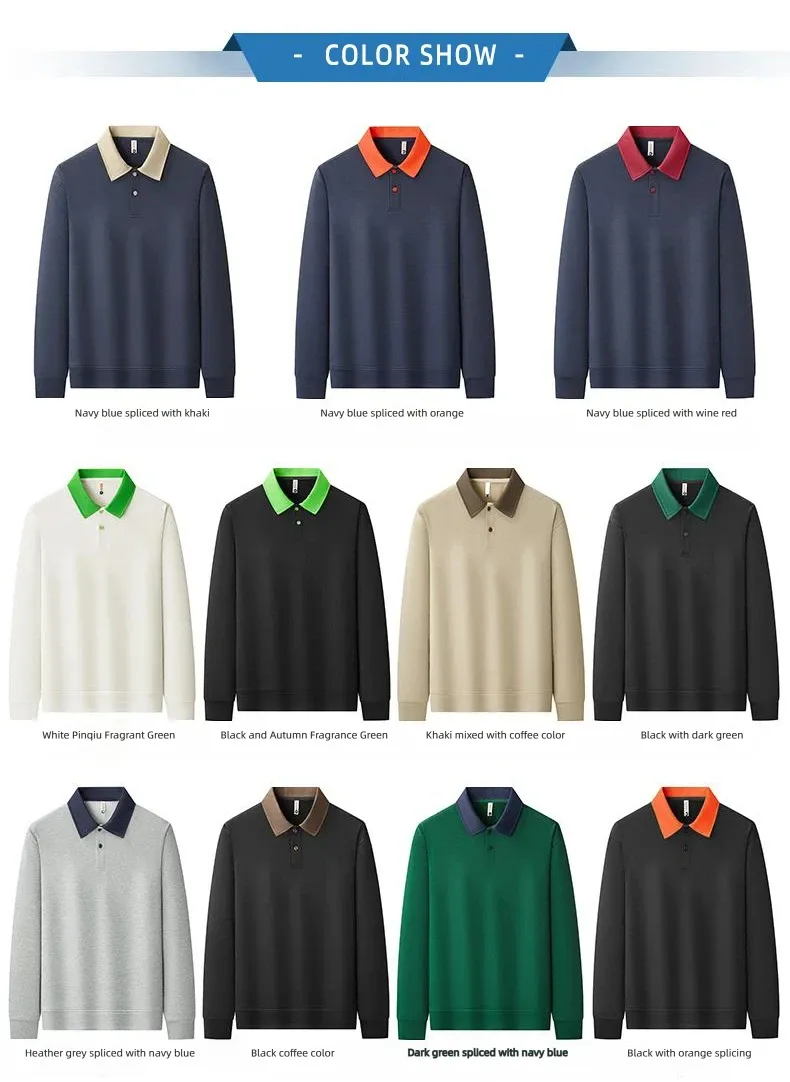
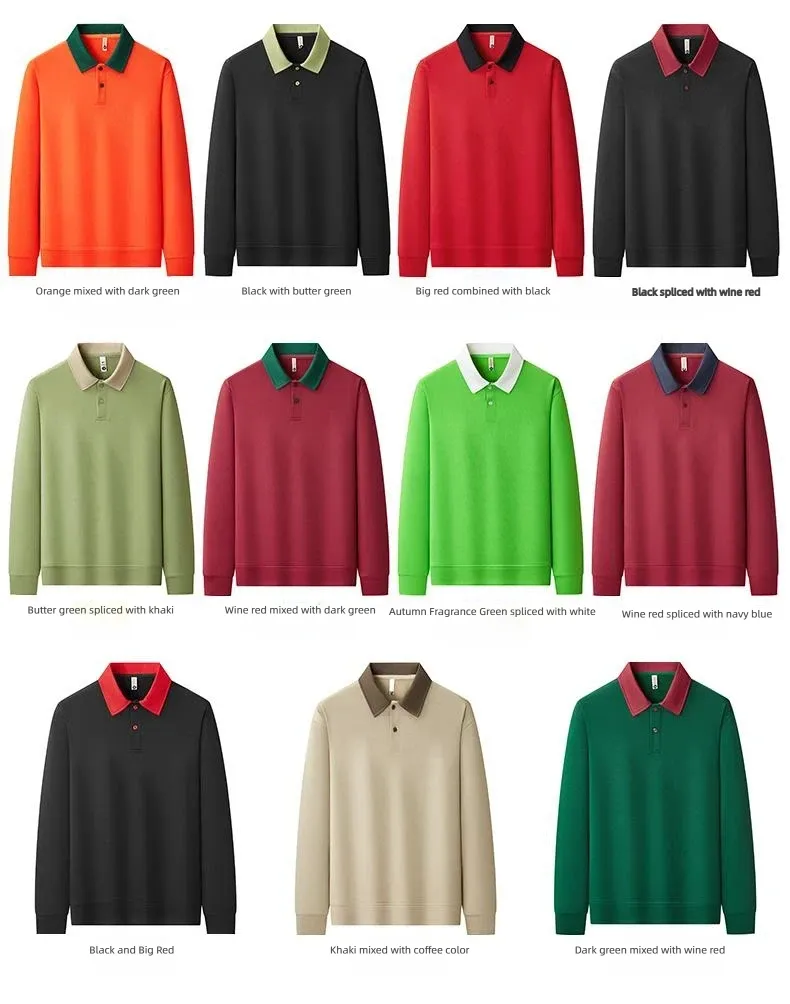
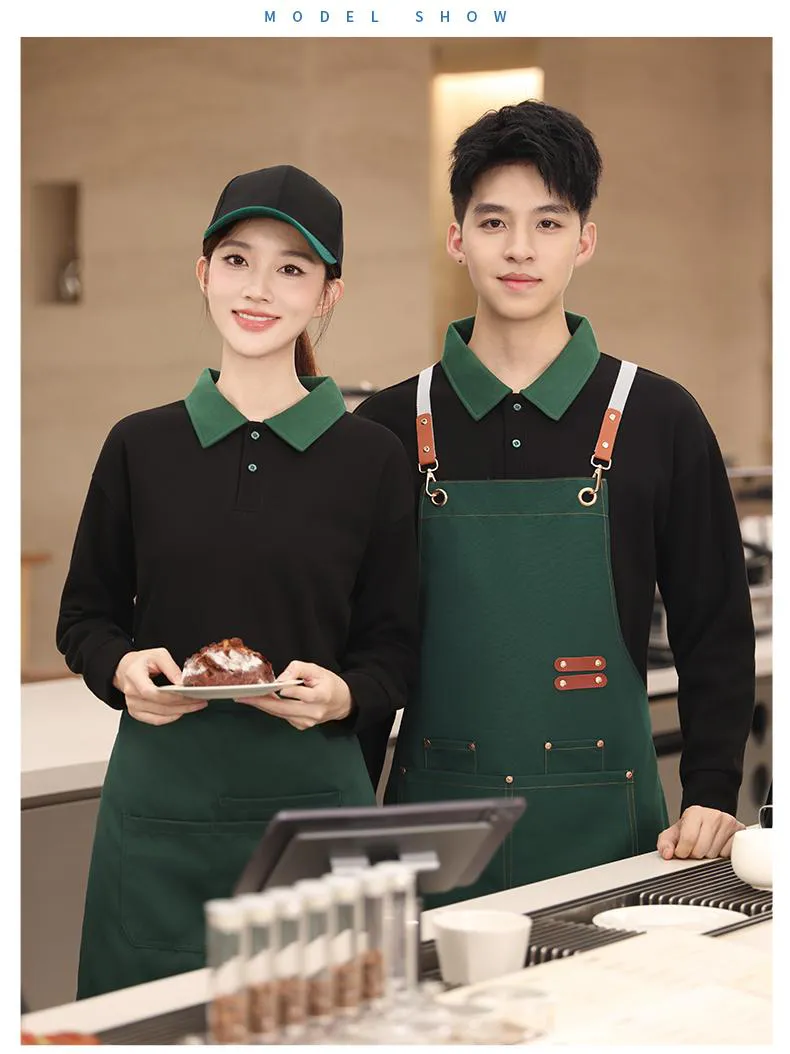
Stock runs to 21 colour combinations, each pairing a body colour with a second colour on the collar, from navy with burgundy and black with avocado green through to heather grey with navy and khaki with coffee. Sizes run S to 4XL on the same block. These polo collar sweatshirts were first cut for factory floors in spring and autumn, where the morning is cold and the afternoon is not, and the list has grown from there: kitchen and front of house staff, corporate uniform, team and event wear, a printed piece for a product launch, and enough plain colourways that people keep wearing them off shift. Embroidery suits the left chest and the sleeve, where 270 gsm terry has enough body to carry a small mark. Print is the better route for anything large or multi-colour across the back. Keep lettering off the collar, because it is a colour break and a mark stitched across two colours never sits flat however careful the digitising. Where the stock colours or the size range do not fit, these polo collar sweatshirts can be rebuilt to your own cloth, colour and trim, on a longer schedule than a stock order with a logo on it.
Specification sheet
| Attribute | Specification |
|---|---|
| Fabric | 270 gsm polyester french terry, loopback knit |
| Composition | 100% polyester |
| Collar | Self fabric, cut in a second colour |
| Placket | Two buttons, polo style, no zip |
| Cuffs | Self fabric band, same colour as the body, not ribbed |
| Hem | Self fabric band, same colour as the body, not ribbed |
| Pockets | None |
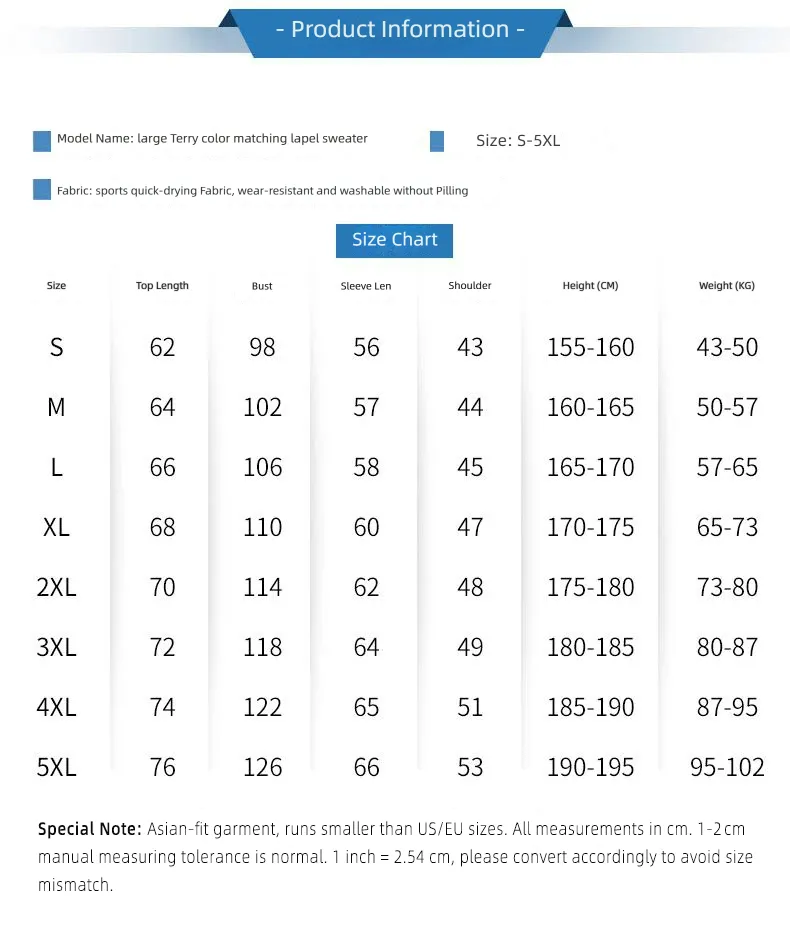
| Fit | Unisex, regular |
| Sizes | S to 4XL |
| Colours | 21 pairs, White with Autumn Green, Navy with Burgundy, Navy with Orange, Navy with Khaki, Red with Black, Black with Avocado Green, Black with Autumn Green, Black with Red, Black with Burgundy, Black with Orange, Black with Coffee, Black with Dark Green, Burgundy with Navy, Burgundy with Dark Green, Orange with Dark Green, Khaki with Coffee, Heather Grey with Navy, Dark Green with Navy, Dark Green with Burgundy, Avocado Green with Khaki, Autumn Green with White |
| Colour order | First colour is the body, second colour is the collar |
| Season | Spring and autumn, mid-weight |
| Weight class | 270 gsm, mid-weight |
| Decoration | Embroidery, screen print, heat transfer |
| Care | Machine wash cold, wash inside out, do not bleach, line dry, cool iron, do not iron over embroidery or print |
| Custom | Colour, cloth and trim to order |


FAQ
Q: Is french terry the same thing as fleece?
No, and the difference matters. Fleece, meaning brushed fleece, has the inside surface brushed up into a fuzzy nap. French terry, which the trade also calls loopback, leaves the inside as a soft standing loop of yarn that is not cut or brushed. Both trap warm air, but terry is lighter for the same warmth, breathes better and does not pill the way a brushed face can. This sweatshirt is french terry, 270 gsm, so it sits in the mid-weight band rather than the heavy fleece band.
Q: Will it shrink after washing?
Less than a cotton sweatshirt would. Polyester does not absorb water into the fibre the way cotton does, so there is very little movement in the first wash and almost none after that. Wash cold and line dry rather than tumble. We do not print a shrinkage percentage on the page, because that figure belongs to one fabric batch and one test method, so ask us and we will confirm what applies to your order.
Q: How warm is it, and can it be worn in winter?
It is a mid-weight piece at 270 gsm, built for spring and autumn, for cold mornings that turn mild by noon, and for air conditioned rooms that run cold. On its own it is not a winter garment in a cold climate. Layered under a jacket it works through a mild winter, and plenty of people wear it exactly that way.
Q: Should the logo be embroidered or printed?
Embroidery is the better choice for a chest badge or a small sleeve mark, because 270 gsm terry has enough body to hold the stitches without the cloth sinking. Print suits anything large or with many colours across the back. One place to avoid: the collar. It is a colour break, and a mark stitched across two colours will not lie flat no matter how the file is prepared. Send us the artwork and we will tell you which method fits the size and the placement.
Q: How does the sizing run, and is it truly unisex?
One unisex block, cut on a men’s base, so the shoulder is square and the body runs straight. Women on the team usually take one size down from their men’s equivalent, and the size chart reflects that. The range is S to 4XL. Check the size chart before ordering, and if the order covers a mixed group, send the headcount by size and we will flag anything that looks off.
Q: How should it be washed?
Machine wash cold, inside out, mild detergent. Do not bleach. Line dry rather than tumble, because heat is what pulls a knit out of shape. Iron cool if you need to, and never iron directly onto embroidery or print. Wash dark colours separately for the first couple of washes, mainly for the collar, which is a different dye lot from the body.
Recommended Products · Popular Picks
4 items · Based on your browsing