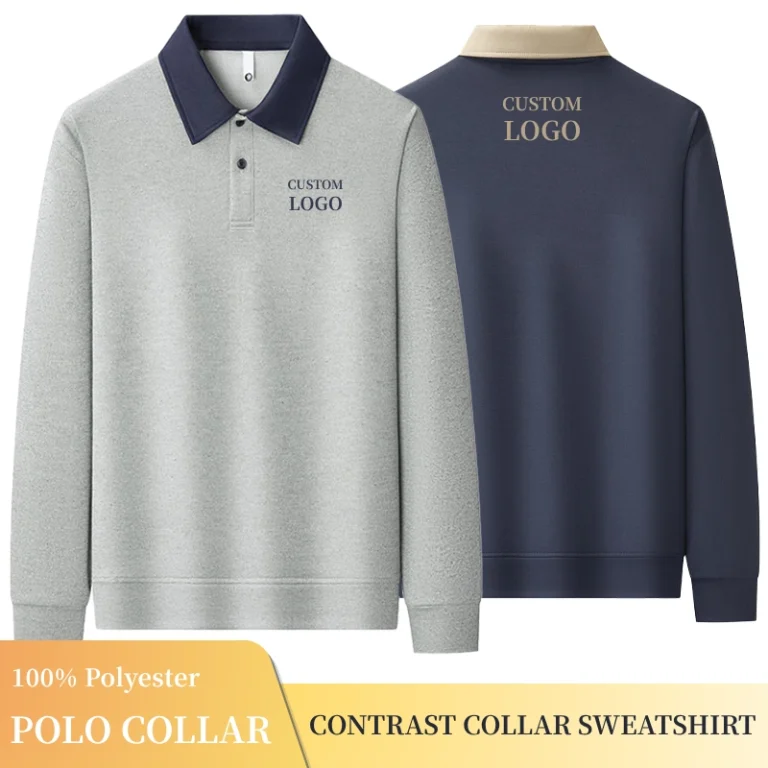
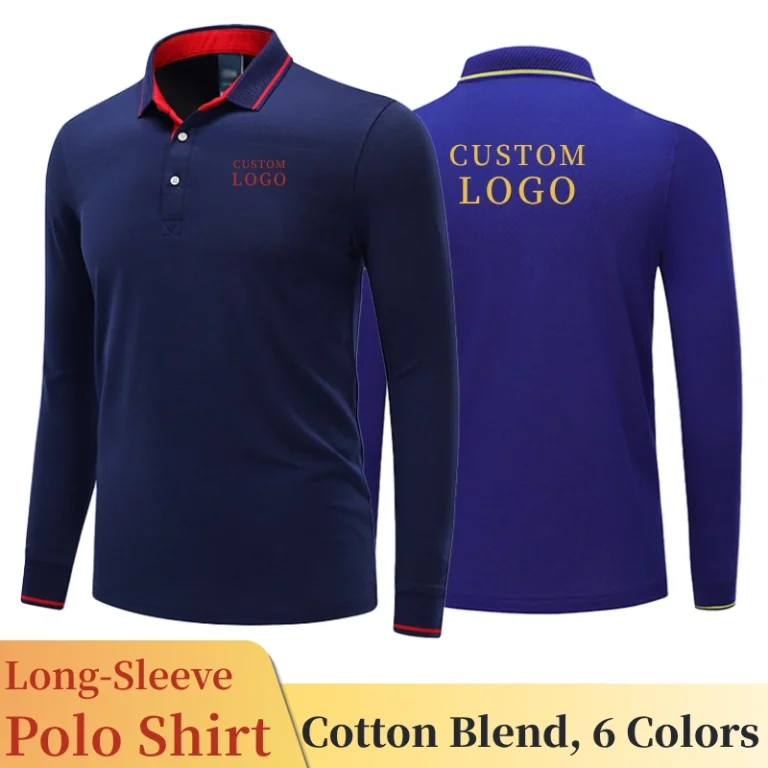
If you have ever held two polo shirts that looked identical on screen but felt completely different in hand, fabric weight is usually why. This guide to polo shirt fabric weight walks through what GSM means for custom polos, the ranges we recommend for different uses, and how to brief your factory so you get the same shirt on every reorder.
Weight is measured in GSM — grams per square meter — and it quietly decides how a shirt drapes, how long it lasts, and whether it reads as “premium” or “promotional.” Most custom polo shirt GSM values land between 160 gsm and 240 gsm. Outside that band, you are either in featherweight fashion territory or heavyweight workwear territory.
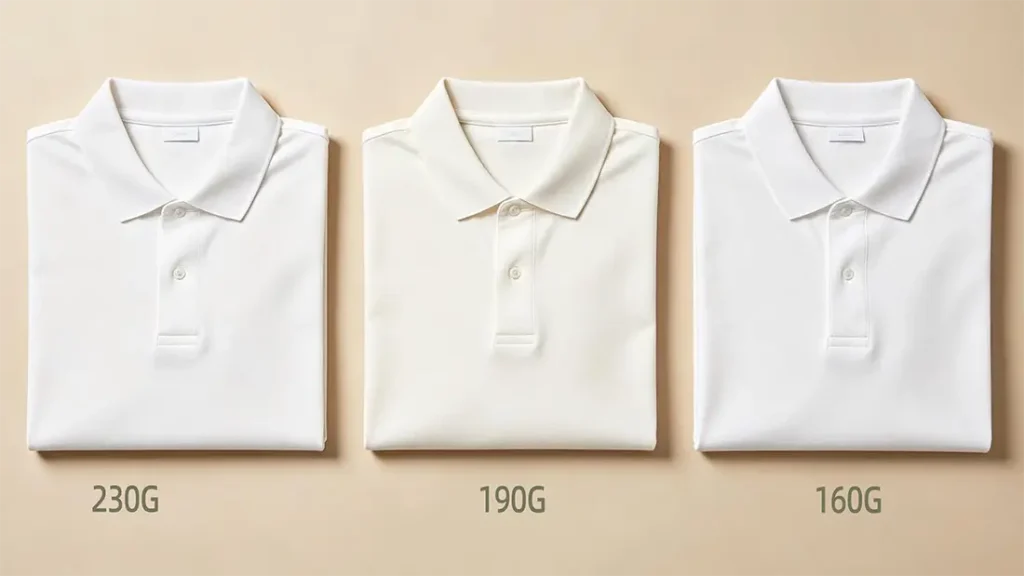
What GSM actually measures
GSM is the weight of one square meter of the fabric. Higher GSM = denser, heavier, more structured. Lower GSM = lighter, softer, more breathable. It is the single number that predicts hand-feel better than any photo.
Polo Shirt Fabric Weight: The Ranges We Recommend
| GSM range | Feel | Best for |
|---|---|---|
| 160–180 gsm | Light, breathable, soft | Hot climates, events, giveaways |
| 180–220 gsm | Balanced, holds shape | Corporate uniforms, hospitality, schools |
| 220–260 gsm | Structured, substantial | Premium brands, golf, outer-layer use |
Our standard custom polo runs at 180–220 gsm cotton pique — the sweet spot where the shirt keeps its collar and silhouette after a full day and a hundred washes, without feeling stiff.
Cotton pique vs polyester: weight is not the whole story
Weight and fiber are separate decisions. A 200 gsm cotton pique and a 200 gsm polyester knit feel and perform very differently:
- Cotton pique at 180–220 gsm gives that classic, breathable, professional look. It is our default for office, hotel, and retail uniforms.
- Polyester at a similar weight wicks moisture and dries fast — better for outdoor crews and active staff, but it can feel warmer against the skin.
- A 65/35 poly-cotton blend splits the difference and usually costs less, which is why it is common for large hospitality runs.
For most buyers, the best polo shirt fabric is 180–220 gsm cotton pique for uniforms and a lighter poly blend for active use. If you are not sure which to brief, tell your supplier where the shirt will be worn and how many hours a day. A good factory will steer you to the right cloth and weight.
Why weight matters for reorders
Here is the part buyers forget: the shirt you approve is only as good as the shirt you get on reorder six months later. GSM is the spec that keeps reorders consistent. When you lock a weight (say, 200 gsm cotton pique) into your tech pack, every future batch matches — same drape, same opacity, same print surface.
We keep approved fabrics on file by client, so your second and tenth order look like the first. That consistency is what separates a uniform program from a one-off giveaway.
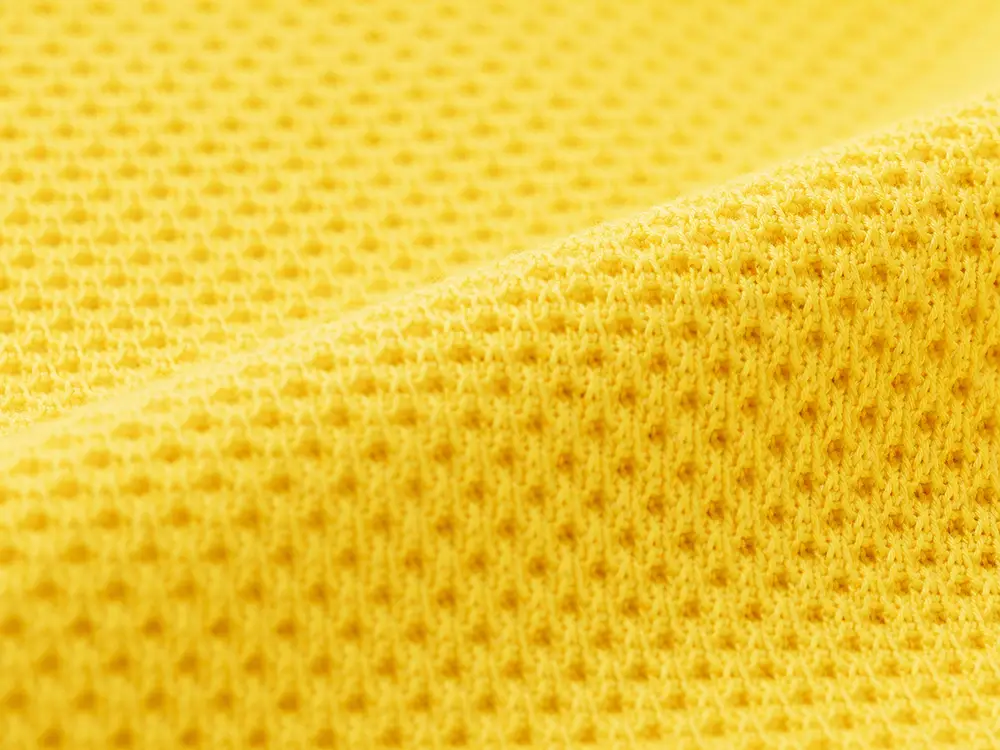
How we handle fabric for custom orders
As a Shenzhen-based OEM/ODM manufacturer, we produce both from your spec and from your artwork or physical sample (来图来样定制). For custom polos our standard is 180–220 gsm, but we can run lighter or heavier on request — just tell us the use case. Minimum order is 300 pieces per design and color; if you need to start smaller, our blank polo stock decorated to order opens lower quantities and faster turnover. Sampling takes about 7 days, bulk around 30 days after sample approval, shipped EXW/FOB by express, air, or sea. See our custom polo shirts product category for standard cloth options.
Quick FAQ
Does higher GSM mean better quality? Not automatically. A 260 gsm shirt is “better” only if you want structure; for a hot-climate event tee, 180 gsm is the smarter choice. Match weight to use, not to the number.
Can I mix weights across one order? Yes, if they are different styles. We brief each style’s GSM separately so you get exactly the hand-feel each use needs.
Will a heavier shirt hide print better? Generally yes — heavier cotton shows less show-through on dark prints. If you are printing a large front design, we may recommend a slightly heavier cloth or a print underlay.
Ready to spec your polos?
Tell us the use case, climate, and how many hours a day the shirt will be worn, and we will recommend a GSM and fabric — then send a sample so you can feel it before committing. Request a quote and we will respond within one business day.