Dye lot variation is why a buyer can receive 800 navy polos in March and another 800 in September, same color code, same specification, same factory, and find the two batches do not quite match. Then comes the email asking what went wrong.
Usually nothing went wrong. This is dye lot variation, and it is the part of textile production that the industry explains badly, so here it is properly.
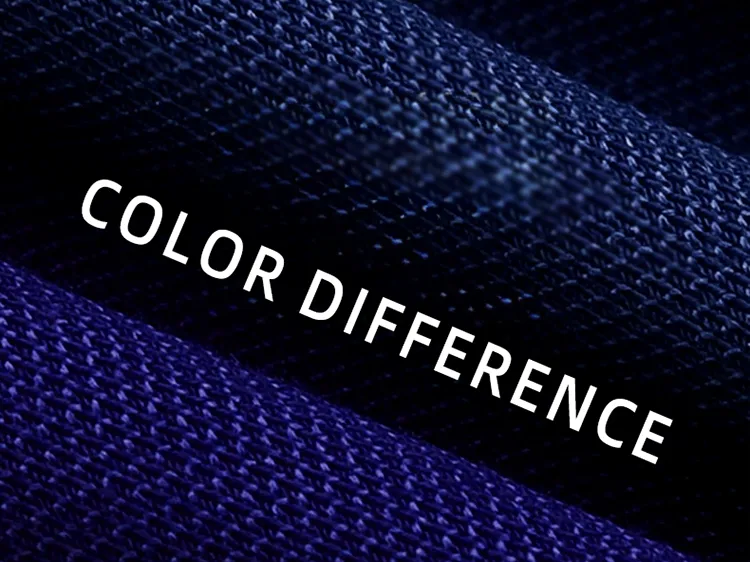
What a dye lot is
Fabric is dyed in a bath. That bath has a finite volume, so a mill dyes a fixed weight of cloth at a time, and everything that comes out of one bath is one dye lot.
Two baths of the same recipe, run on different days, will not produce an identical shade. Not because anyone is careless, but because the inputs are not identical. Water hardness changes. The temperature curve varies by a degree or two. The cotton itself absorbs dye slightly differently depending on where it was grown and how it was prepared. Machines are recalibrated. Even the humidity in the dyehouse moves the result.
Color matching is therefore a process of hitting a target within a tolerance, not of reproducing a number.
The promise you can actually hold
This is the sentence worth putting in your purchase order: same color code, not same dye lot.
“Same color code” means the color is dyed to the approved reference, and is expected to fall within the accepted tolerance of it.
“Same dye lot” means a single bath, and it can only be promised for one production run, for the quantity that run consumes. It cannot be promised for a reorder six months later, and any supplier who says otherwise is either dyeing in very small batches or does not understand the question.
For an order placed all at once, everything comes from one lot and the batch is uniform. That is the thing to protect.
How much difference is normal
Color difference is graded against a gray scale, with 5 meaning no visible difference and 1 meaning an obvious one. A rating of 4 to 5 is generally acceptable for a commercial match, and 4 is common across separate lots.
On instrumentation, the measure is Delta E. Below 1.0 is invisible to most eyes. Around 2.0 is detectable by a trained eye side by side but not across a room. Above 3 is visible to anyone.
A difference of one gray scale step between two lots produced months apart is normal in this industry. If you are comparing them side by side on a white table, you will see it. On two people across a warehouse floor, you will not.
It is not only color
Two other properties drift between lots.
Shrinkage. Cotton knit shrinks by a percentage that depends on the yarn, the finishing and the tension. A lot finished in a slightly different way can shrink half a percent more.
Handfeel. Dyeing and finishing change the surface. Two lots that measure identical can feel a little different, and one may sit softer than the other.
Neither is usually a defect. Both are why a uniform programme ordered in one go wears consistently and one ordered in dribs and drabs does not.
How to plan around it
Order the full year at once if the programme is large. Storage costs less than a mismatched second batch, and it removes the problem entirely.
If you cannot order at once, keep five to ten percent spare from the first lot as replacement stock for new starters and damaged garments.
Keep a sealed sample of the approved lot, labelled with the date and the lot number. When the next batch arrives, compare against the sealed sample, not against a shirt that has been washed forty times.
Approve the lab dip, not just the bulk. A lab dip is a small preview of the shade, and approving it in writing gives both sides a reference.
Expect a reorder to include dyeing time. If the fabric has to be dyed, that is added to the lead time, not absorbed by it.
What we do on a reorder
We keep the original recipe and the approved swatch on file, and we dye to it. We tell you at quotation stage if the fabric in that color is no longer held, and what the expected delivery is.
We do not promise that a reorder in a different season will be indistinguishable from the first batch, because we would be promising something the dyehouse cannot deliver.
What we will do is tell you honestly when a difference is likely, and give you the option to hold stock for the full programme instead.
What to write in the order
Color code and reference, the standard for acceptance, the quantity, and whether the goods are part of a programme that will be reordered.That last line is the one that saves the argument. A supplier who knows a second batch is coming plans differently from one who thinks this is a single order.